Major Infrastructure Expansion Unveiled for Brisbane 2032 Legacy Projects
The Queensland Government has officially unveiled its 2032 Delivery Plan, committing to a wave of generational infrastructure projects across New Farm, Teneriffe, and Newstead. The announcement, made by Premier Annastacia Palaszczuk, marks a decisive shift from previous Olympic planning models. The plan prioritises long-term community benefit over temporary spectacle, with a focus on climate-positive development and regional inclusivity.
According to the Committee for Brisbane, the new strategy responds directly to the recommendations of the independent 100-Day Review. “Brisbane 2032 provides a once-in-a-generation opportunity to uplift the prosperity of the entire state of Queensland,” said Jen Williams, CEO of the Committee for Brisbane. “For too long, businesses and the community have been calling for a clear plan to allow them to move forward and make decisions about their future.”
Climate-Positive Games: A Global First
Brisbane 2032 will be the first Olympic Games required by contract with the International Olympic Committee (IOC) to deliver a climate-positive outcome. This means the event must generate more carbon savings than it emits across its entire lifecycle. As Ali Cheshmehzangi, Head of School at the University of Queensland’s School of Architecture, Design and Planning, explained, “These games will remove more carbon from the atmosphere than they create.”
This mandate demands a radical rethink of traditional Olympic planning. Instead of constructing new venues from scratch, organisers are prioritising the use of existing infrastructure. All new or significantly upgraded facilities will target the highest six-star Green Star rating under Australia’s sustainable building standards. Public transport will be central to the strategy, with all new buses funded by Translink set to be zero emissions from 2025.
The move aligns with Queensland’s broader climate goals: net-zero emissions by 2050 and 70% renewable energy by 2032. As Professor Marcus Foth from QUT noted, achieving this will require “an entirely new approach to the economy and society, which prioritises the planet and life itself.”
Legacy Beyond the Games: Regional Inclusivity and Urban Renewal
Unlike past Olympics that concentrated events in a single urban core, Brisbane 2032 plans to spread competitions across the state. This approach ensures economic and social benefits extend beyond Brisbane city centre to regional centres like the Gold Coast and Townsville. “The aim is to boost the broader region with future-focused, sustainable facilities and infrastructure,” Cheshmehzangi wrote.
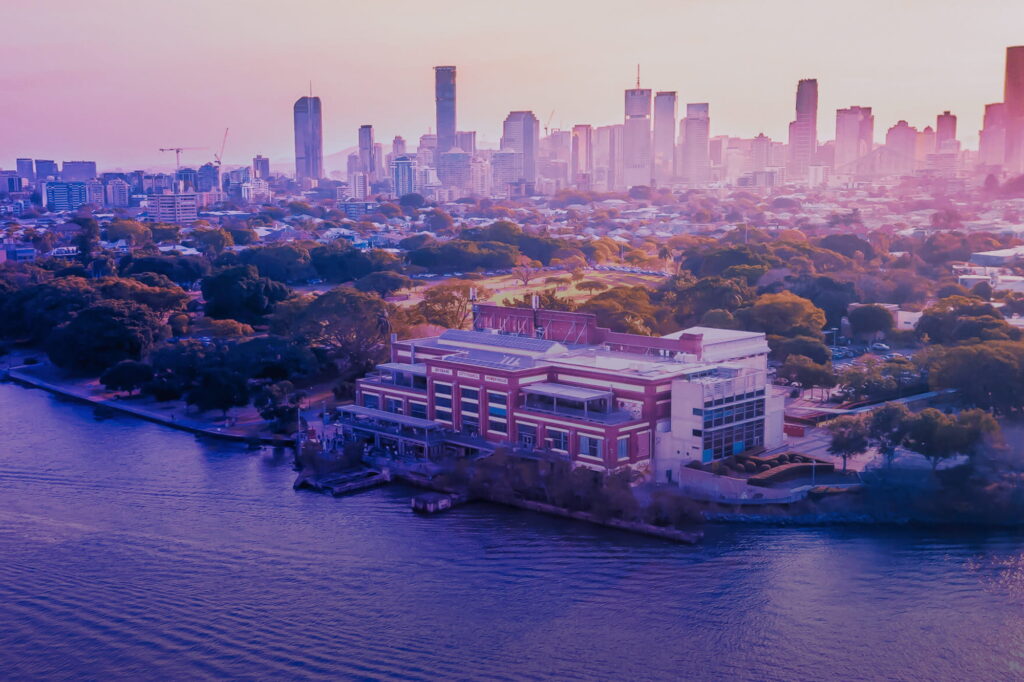
New Farm, Teneriffe, and Newstead are at the heart of this transformation. These inner-city suburbs, already known for their vibrant mix of residential, cultural, and commercial spaces, will see significant upgrades to transport, green space, and community facilities. The focus is on creating walkable, connected precincts that serve residents long after the Games conclude.
Historically, these areas have undergone multiple phases of redevelopment. Teneriffe’s transformation from a former industrial hub into a cultural and lifestyle precinct began in the 1990s. New Farm’s riverside parklands and heritage buildings have long attracted artists and families. Newstead’s proximity to the Brisbane River and its mix of old and new architecture make it a key node in the city’s evolving urban fabric.
Community and Economic Impact
Residents in these suburbs are expected to benefit from improved public transport links, expanded green corridors, and new community hubs. The emphasis on active transport—walking, cycling, and zero-emission buses—aims to reduce traffic congestion and improve air quality. Local businesses, particularly in the hospitality and retail sectors, anticipate increased foot traffic and investment.
Property values in the area are likely to rise, though this could also trigger concerns about affordability. The Committee for Brisbane has stressed that legacy planning must include measures to protect long-term residents from displacement. “The goal is not just infrastructure, but inclusive growth,” said Williams.
Small businesses and cultural organisations in New Farm and Teneriffe have already begun engaging with the delivery plan. The “BIG Brisbane Ideas Generators” sub-committee, launched by the Committee for Brisbane, includes young professionals focused on place-based initiatives that reflect local identity and creativity.
What’s Next: Public Consultation and Implementation
Public consultation on the 2032 Delivery Plan is set to begin in April 2025. Residents, business owners, and community groups will have the chance to provide feedback on specific projects, including transport upgrades and green space enhancements. The Council of Mayors (SEQ) and the Committee for Brisbane will host a series of town halls across the region.
Construction on initial phases of the infrastructure is expected to start in late 2025. The full delivery timeline will be published in the upcoming “Benchmarking South East Queensland in a Global Context” report, which compares the region’s trajectory to nine global peer cities across ten thematic pillars, including sustainability, talent, and resilience.
As Brisbane prepares for its moment on the world stage, the focus remains on lasting change. “This isn’t just about hosting games,” said Cr Adrian Schrinner, Lord Mayor of Brisbane. “It’s about building a better city for everyone, today and tomorrow.”